The project

It isn't one race.
It's three years.

Getting to the start line of the 2029 Mini Transat means racing one season after another first: six to ten races a year, from March to September, between Brittany, the Mediterranean and the Azores. The crossing is the end of a road that is already under way.

The circuit

One season
after another

To enter the Mini Transat you have to log 1,500 miles of official racing with the same boat and complete a 1,000-mile solo qualifying passage, non-stop.

That turns the years before into one continuous season. The Class Mini circuit runs along the French Atlantic coast, the Spanish and Italian Mediterranean and the Azores: every race is a start, a finish, a pontoon with an audience and a new story to tell. It doesn't begin in 2029 — it begins the first weekend of March.

March
Mini Petrolera
Garraf · Spain
March
Arcipelago 650
Livorno · Italy
April
Plastimo Lorient Mini
Lorient · France
April
Roma x2
Roma · Italy
April
PalmaVela · La Larga
Palma de Mallorca · Spain
May
La Pornichet Select
Pornichet · France
May
Mini en Mai
La Trinité-sur-Mer · France
June
Trophée Marie-Agnès Péron
Douarnenez · France
June
Mini Fastnet
Douarnenez · France · double-handed
June
Massilia Cup
Marseille · France
July
Solo Med
Mediterranean
July
Mini Atlantique
Les Sables → Azores → Les Sables
August
Mare Nostrum
Garraf · Spain
September
Ministorique du Crouesty
Arzon · France
September
Duo Concarneau
Concarneau · France
September
Mini Barcelona
Barcelona · Spain

Official Class Mini 2026 calendar. Which races are sailed each season is confirmed against qualification and the class's final calendar.

Who is behind it

The rigger building
his own campaign

I work as a rigger at Marina Coruña Varadero, where I learned the trade from Chuny Bermúdez de Castro.

We work mainly on sailboats between 25 and 60 feet — maintaining everything above deck: fittings, masts, sails, lines and rigging.

Now I'm applying that same trade to my own boat, to cross the Atlantic single-handed in 2029.

Project logbook Every step forward, dated and photographed The open diary of the campaign, newest entry first: haul-outs, tuning, races and qualifying miles. It grows as it goes. Read the entries →
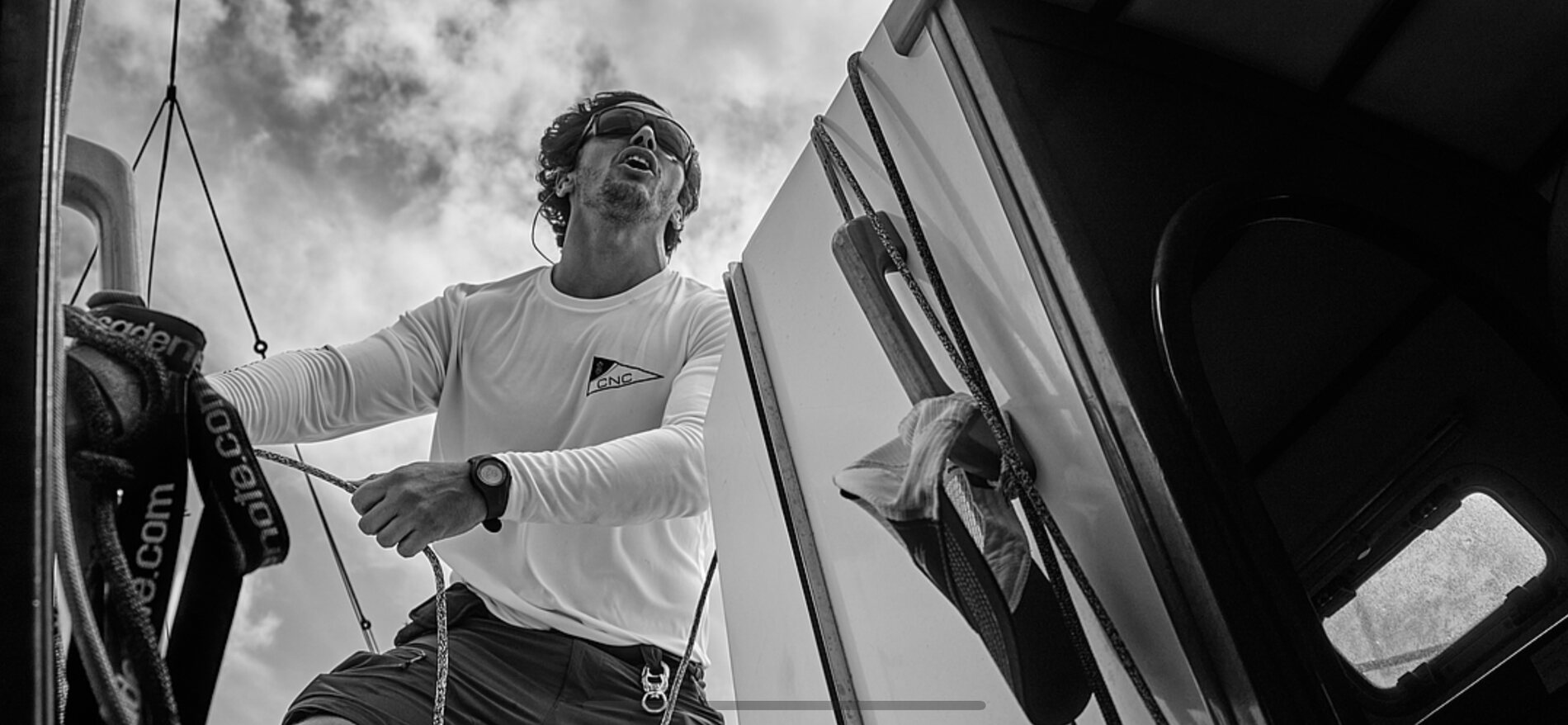
Mati Chemes working the winch on board
The class

Where ocean racing
invents its future

The Mini 6.50 is the smallest class in ocean racing and, at the same time, the freest. Its rule leaves the prototype division almost without design restrictions. It's the only place in the sport where a radical idea can be built, launched and win a transatlantic inside the same cycle.

That's why the industry watches it. Yards, naval architects and Vendée Globe teams use the Mini as a test bench: what works here ends up, years later, on boats twenty times more expensive.


Innovation

What was born on a Mini

1977
Bob Salmon founds the race

As a reaction to the spiralling budgets of ocean racing. Small boats, strict safety rules, total design freedom.

2010 — 2011
The scow bow

The architect David Raison launches Magnum, the first prototype with a rounded bow, and wins the 2011 Mini Transat with it — precisely the edition that finished in Salvador de Bahía. The idea was considered an eccentricity.

2016 — 2018
The first foils

Prototype Minis fit foils and serve as a development platform years before the technology settles in the bigger classes.

Hoy
All offshore is scow

The bow that won a Mini Transat is today the standard in Class40 and IMOCA — the same kind of boat that races the Vendée Globe. An idea proved on 6.50 metres redefined an entire fleet.

What wins a Mini Transat today runs the Vendée Globe ten years from now.

Rite of passage

Ellen MacArthur, Michel Desjoyeaux, Thomas Ruyant, Charlie Dalin, Ian Lipinski, Yannick Bestaven. They all came through here before winning the Vendée Globe, the Route du Rhum or the Transat. There is no equivalent credential in ocean racing.

The fleet is capped at 90 boats and there are more candidates than places: they're allocated by miles logged in official racing. Being on the start line is already a filter.

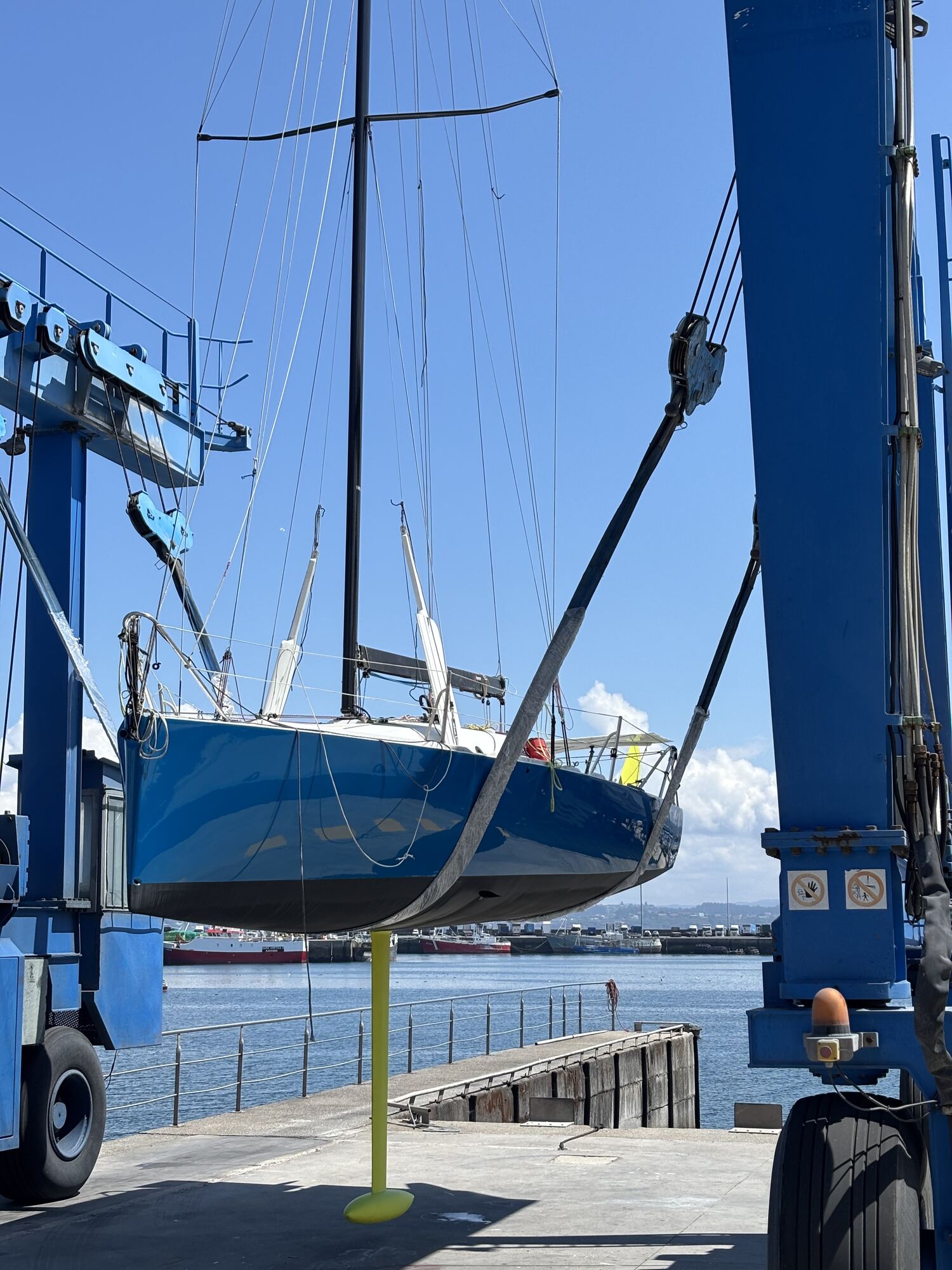
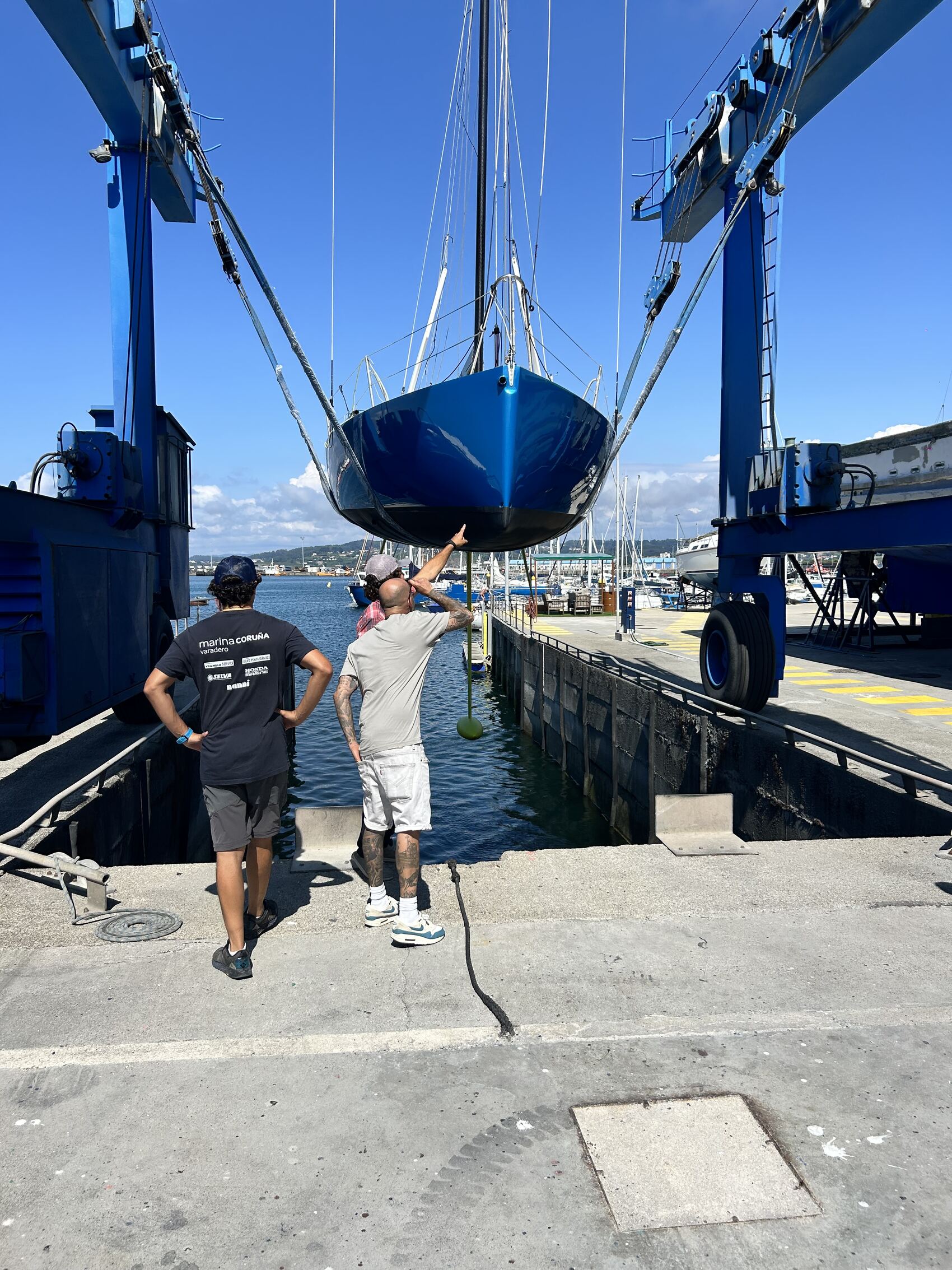
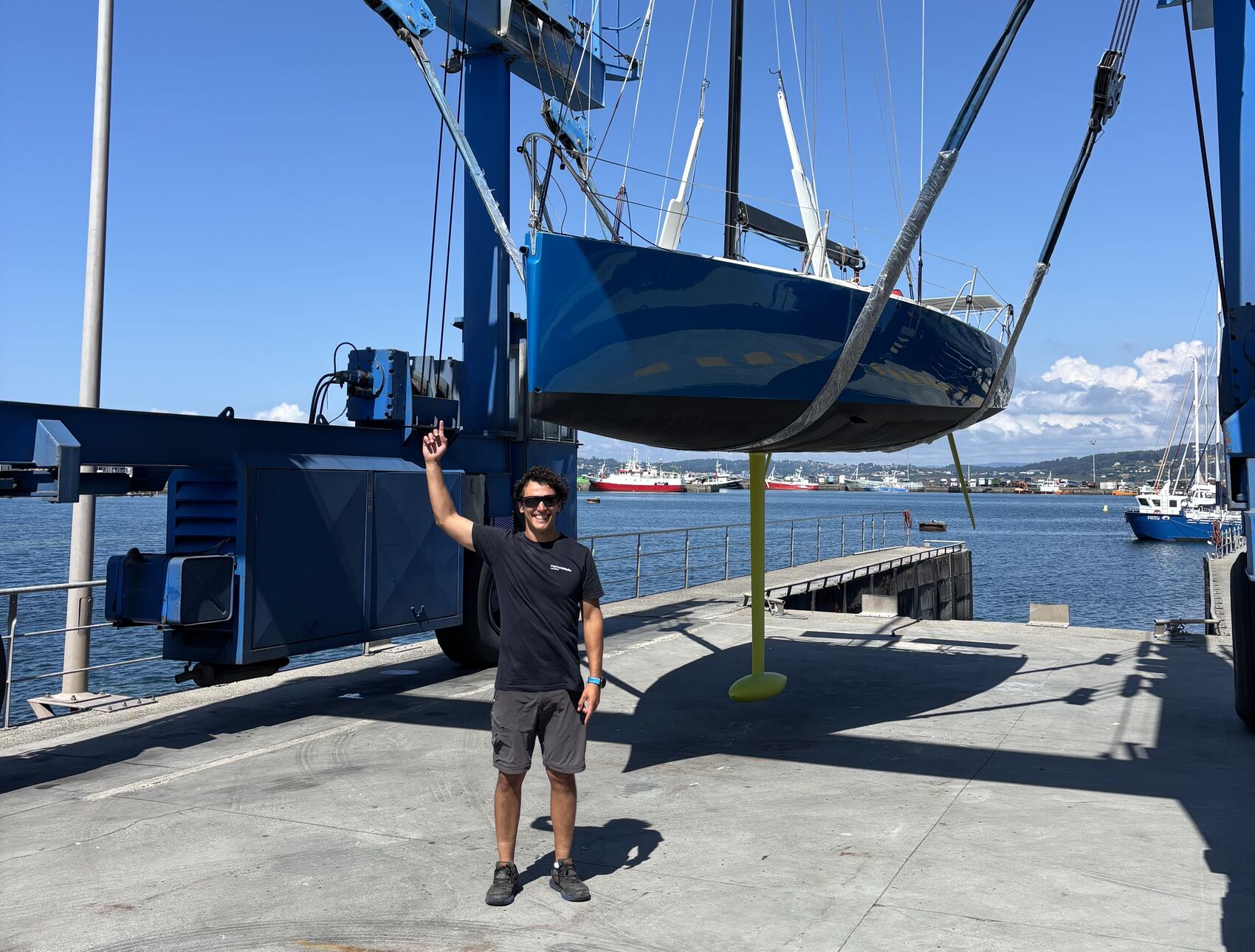
Barra lifted in the travelift, hull and appendages in view
The boat

920 kilos
against the Atlantic

Six and a half metres. Under a tonne. No one to take a watch, no technical stopover, no weather forecast sent from shore.

It's a Mini 6.50 prototype designed by Marc Lombard — the Lombard 7, hull 709. It was christened Luna. Today it is called Barra. Prototype division: the open-design category, around 31 places out of the fleet's 90. It's the part of the class where what doesn't exist yet gets built.

Design
Lombard 7Prototype division
Sail number
FRA 709Hull 709
Length
6,50 mBeam 3.00 m
Draft
1,60 mCanting keel
Displacement
920 kgRace trim
Hull
Boero 604Lampedusa Blue Sea
Sail area

Six sails, over 200 m²

The boat's full inventory. They don't all fly at once: they're combined according to course and wind strength. The downwind sails — spinnaker and code 5 — are the ones that appear in the aerial race footage.

Beyond the cloth

  • Hull topsides — high exposure in port, on pontoons and in the yard.
  • Deck and coachroof — overheads and photography on board.
  • Technical clothing — portraits, interviews and podiums.
SpinnakerDownwind · maximum aerial visibility
90 m²
Code 5Tight downwind
45 m²
MainsailAlways up, in every condition
28 m²
GennakerReaching and broad reaching
23 m²
JibUpwind
16,6 m²
Storm jibHeavy weather
3,6 m²
Full inventory
206,2m²
The route

Back to Brazil
after 18 years

The Mini Transat started from La Rochelle between 2001 and 2011, and in 2011 it finished in Salvador de Bahía for the last time. Class Mini brought that course back in January 2026 for the 2027 and 2029 editions.

In practice it's a new course: media and markets that haven't covered it for almost two decades. The second leg crosses the equator.

La RochelleStart · France
Las PalmasStopover · Gran Canaria
Salvador de BahíaFinish · Brazil
Equator
Leg 1
≈ 1,350 miles
La Rochelle → Las Palmas · 8 to 14 days
Leg 2
≈ 2,700 miles
Las Palmas → Salvador · 18 to 25 days
Fleet
90 skippers
16 nationalities · prototype and series
Gallery

Shot by me

Photography and video made by me, with my own kit. The workshop, the haul-out, the launch and the first miles.

Hull and keel bulb in the travelift
Barra lifted in the Marina Coruña travelift
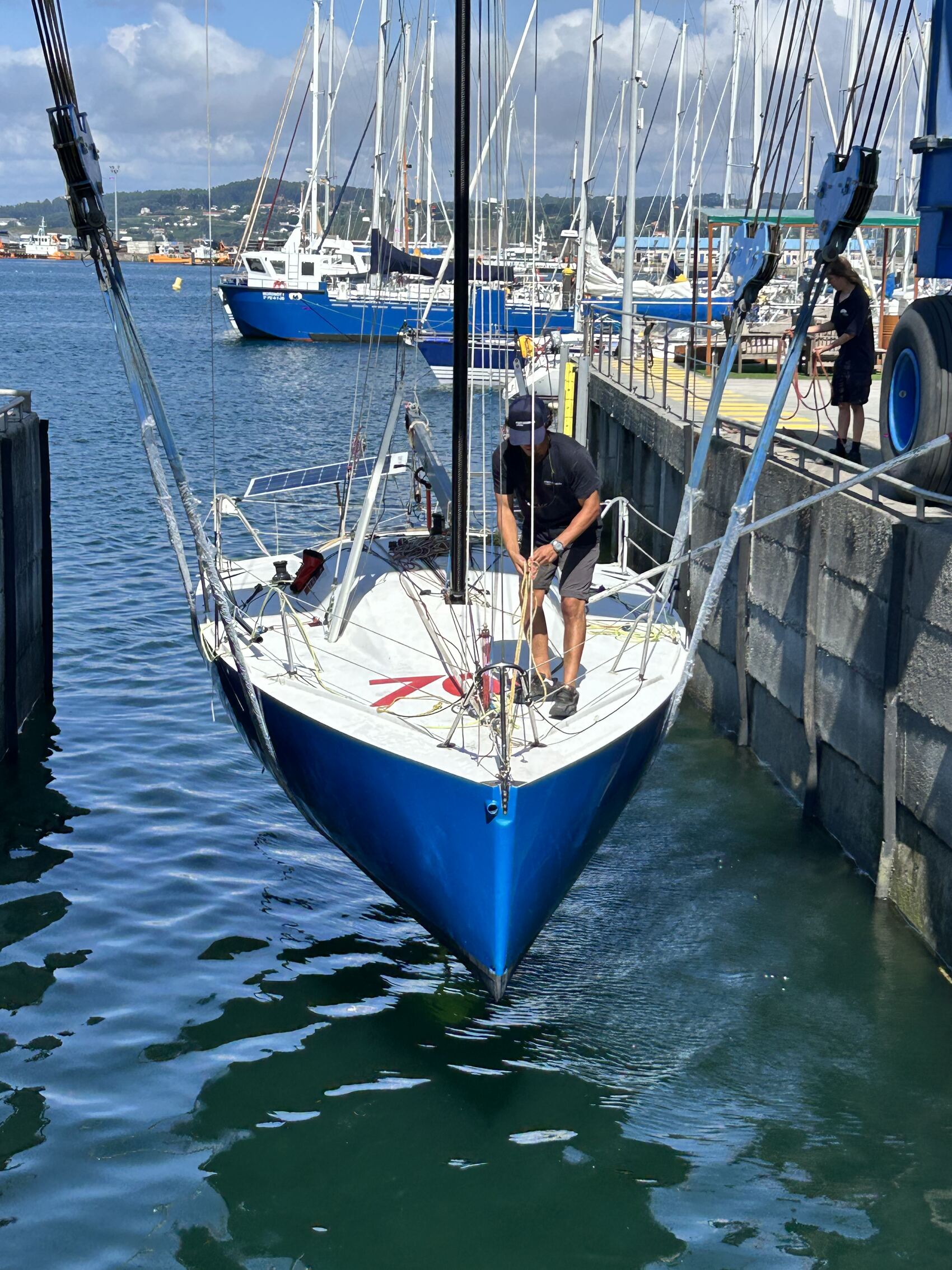
Barra's bow on the dock during tuning
Launch at the A Coruña yard
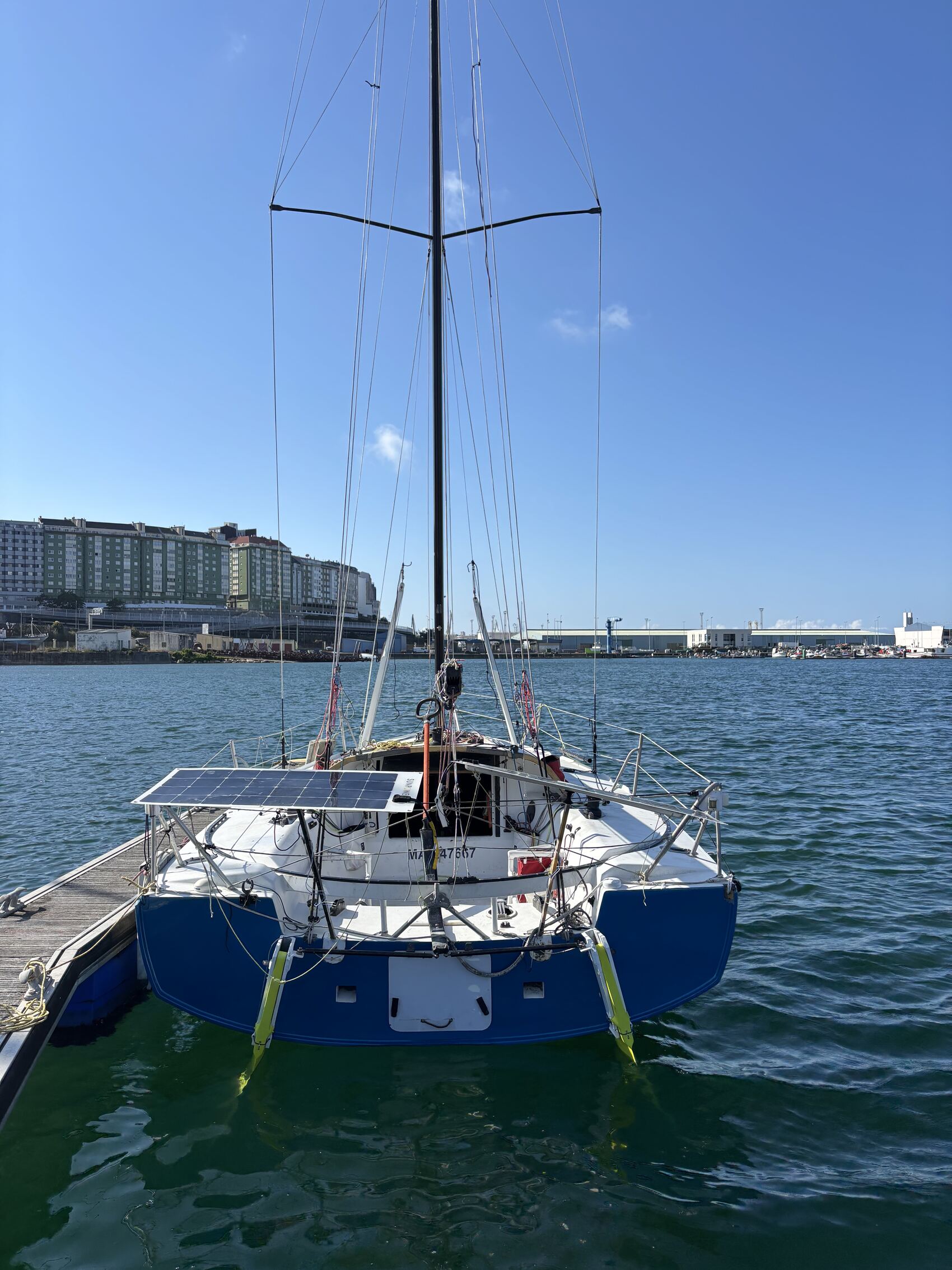
Stern and twin rudders on the pontoon
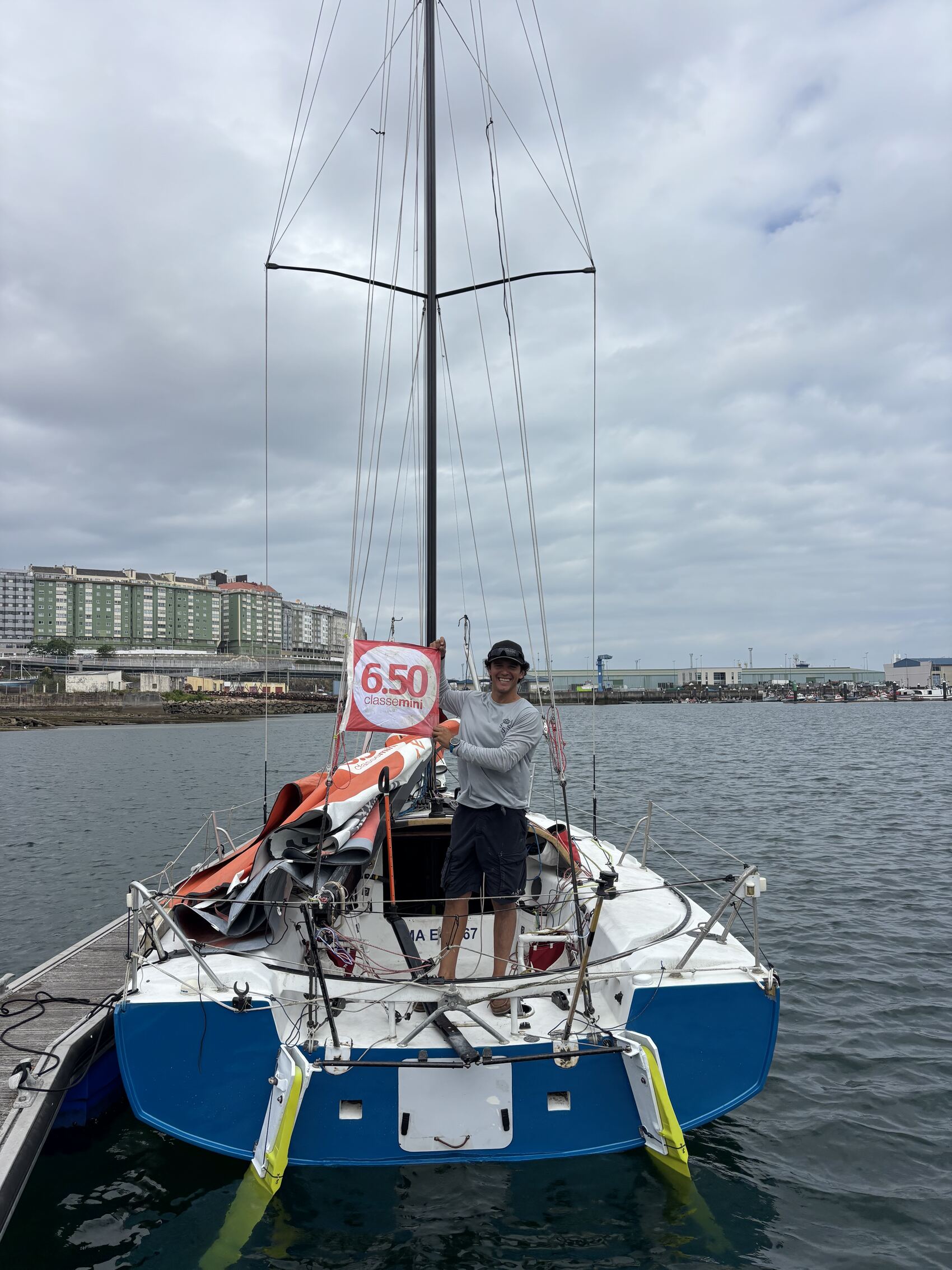
Mati Chemes on board with the 6.50 class burgee
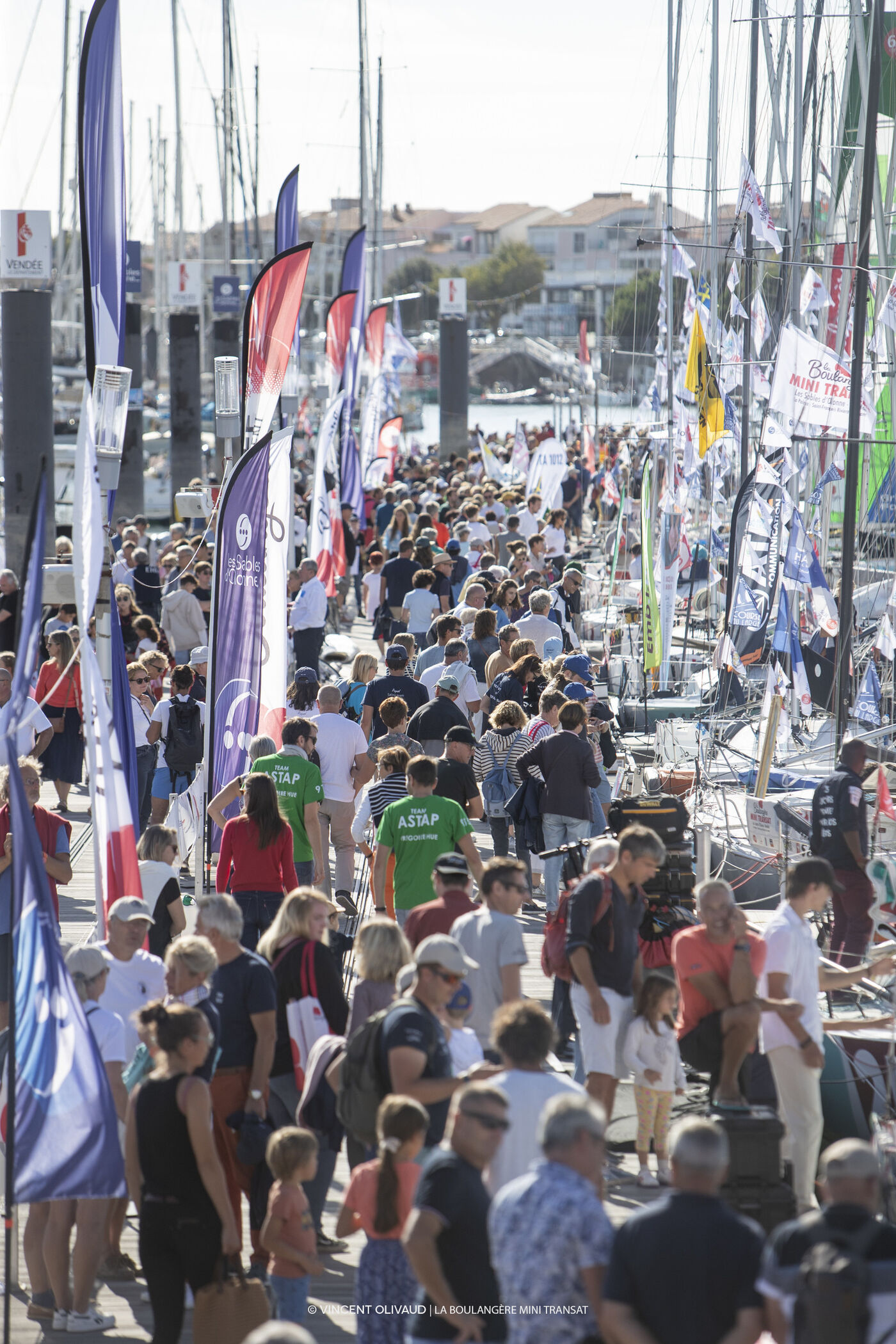
Pontoons of the Mini Transat village © Vincent Olivaud · La Boulangère Mini Transat

Photography and video from the project itself, except the last one, courtesy of Vincent Olivaud. Any image opens full screen.

For brands

You can come in through a single race

The goal is 2029, but the road is made of smaller races, and each one can be sponsored on its own. It's the way to test the partnership without committing to three years.

See how it works